
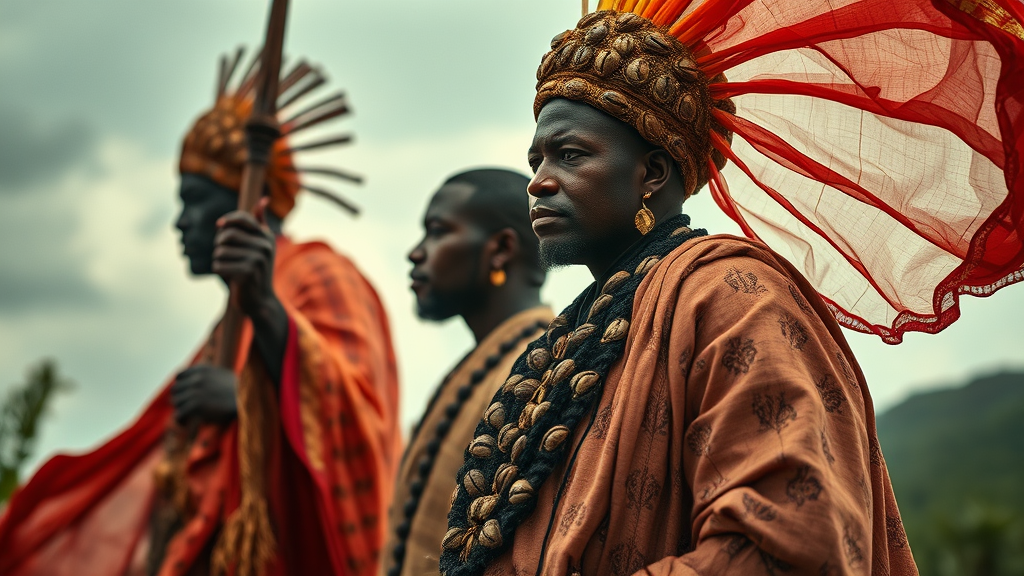
Origen e Historia
La figura de Xangô dentro de la Umbanda encuentra sus raíces profundas en la cosmogonía del pueblo yoruba, específicamente en la región de lo que hoy es el Nigeria y Benín. Históricamente, Xangô es identificado como el cuarto Alafi de Oyo, un monarca legendario cuya expansión y expansión lo consolidaron como un símbolo de poder militar y sabiduría. Tras la diáspora transatlántica, el culto a estas deidades cruzó el océano hacia Brasil, donde se sincretizó con otras tradiciones africanas, el catolicismo y el espiritualismo nativo. En el contexto específico de la Umbanda, una religión genuinamente brasileña fundada a principios del siglo XX, Xangô fue integrado como una de las Orixás de mayor jerarquía. A diferencia de las manifestaciones puramente rituales del continente africano, en la Umbanda esta entidad se presenta como una fuerza de equilibrio cósmico que personifica la ley de la naturaleza y la rectitud del carácter, actuando como un juez implacable sobre la moralidad terrenal.
Fundamentos Tradicionales
Los fundamentos de Xangô se basan en el dominio sobre los elementos elementales del rayo, el trueno y la piedra. En la teología yoruba, el rayo es la manifestación física de la justicia divina, una fuerza instantánea y devastadora que purifica el entorno. La piedra, por su parte, representa la permanencia, la estabilidad y la base inamovible de la verdad. En la práctica de la Umbanda, Xangô se asocia con el color rojo y el blanco, simbolizando la pasión de la acción y la paz de la justicia. Su herramienta principal es el oxê, un hacha de doble filo que representa la dualidad de la vida: la capacidad de creación y de destrucción necesaria para mantener el equilibrio. Su justicia no se entiende como un castigo arbitrario, sino como una corrección necesaria para restaurar la armonía social y espiritual de la comunidad.
Importancia dentro de la Tradición
La importancia de Xangô en la Umbanda es fundamental por su rol como garante de la justicia y el orden. Es el patrón de los jueces, los abogados y de aquellos que buscan la verdad en medio de adversidad. En los rituales espirituales, la invocación a Xangô busca resolver conflictos morales y pedir protección contra las energías negativas que intentan corromper la rectitud. Su presencia recuerda a los fieles la responsabilidad individual sobre sus actos, bajo la premisa de que cada acción tiene una consecuencia inevitable. Como el rey de las montañas, Xangô también otorga la fortaleza espiritual necesaria para enfrentar los desafíos de la vida con templanza y una voluntad inquebrantable, convirtviéndose en un pilar de estabilidad para la estructura social y religiosa dentro del templo sagrado.
Origins and History
The figura of Xangô within Umbanda finds its deep roots in the cosmology of the Yoruba people, specifically in the region of-day Nigeria and Benin. Historically, Xangô is identified as the fourth Alafi of Oyo, a legendary monarch whose expansion and leadership solidified him as a symbol of military power and wisdom. Following the Atlantic diaspora, the cult to these deities crossed the ocean to Brazil, where it syncretized with other African traditions, Catholicism, and native spirituality. In the specific context of Umbanda, a genuinely Brazilian religion founded in the early twentieth century, Xangô was integrated as one of the highest-ranking Orixás. Unlike the purely ritualistic manifestations on the African continent, in Umbanda this entity presents as a force of cosmic balance personifying the law of nature and the rectitude of character, acting as a relentless judge over earthly morality.
Traditional Foundations
The foundations of Xangô are based on his mastery over the elemental forces of lightning, thunder, and stone. In Yoruba theology, lightning is the physical manifestation of divine justice, an instant and devastating force that purifies the environment. The stone, on its part, represents permanence, stability, and the unshakeable base of truth. In Umbanda practice, Xangô is associated with the colors red and white, symbolizing the passion of action and the peace of justice. His primary tool is the oxê, a double-headed axe representing the duality of life: the capacity for creation and the necessary destruction to maintain balance. His justice is not understood as arbitrary punishment, but as a necessary correction to restore the social and spiritual harmony of the community.
Importance within the Tradition
The importance of Xangô in Umbanda is fundamental due to his role as guarantor of justice and order. He is the patron of judges, lawyers, and those seeking truth in the midst of adversity. In spiritual rituals, the invocation of Xangô seeks to resolve moral conflicts and ask for protection against negative energies that attempt to corrupt rectitude. His presence reminds followers of their individual responsibility for their acts, under the premise that every action has an inevitable consequence. As the king of the mountains, Xangô also grants the spiritual strength necessary to face life's challenges with temperance and an unbreakable will, becoming a pillar of stability for the social and religious structure within the sacred temple.