
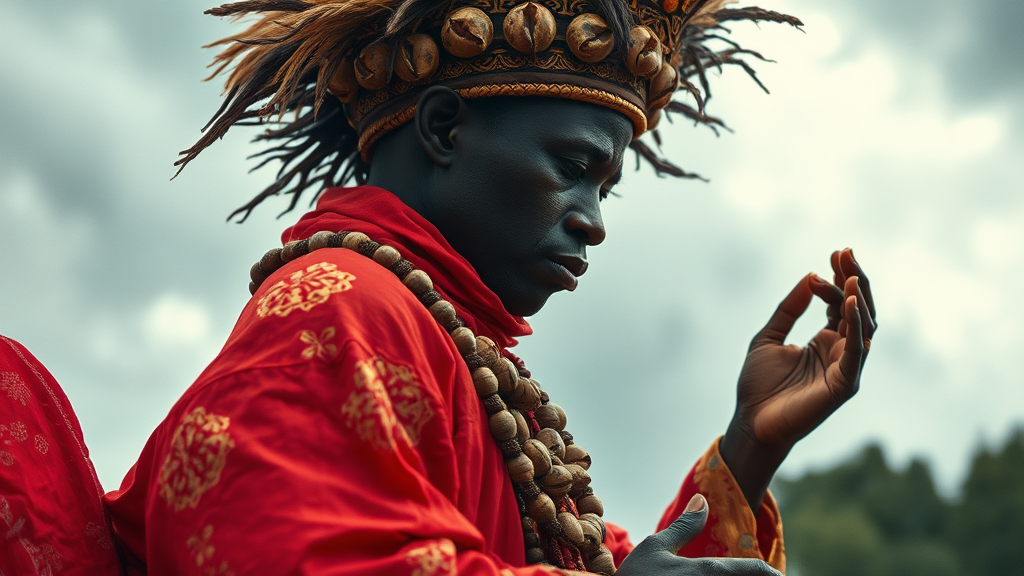
Origen e Historia
La presencia de Xangô dentro del sistema de la Umbanda brasileña representa el complejo proceso de sincretismo y resistencia cultural que experimentaron las diásporas africanas tras la trata transatlántica. Históricamente, Xangô se identifica como el quinto Orixá en la cosmogonía Yoruba, vinculado tradicionalmente a la ciudad-estado de Oyo, en la actual Nigeria Nigeria y Benin. Tras su llegada a Brasil, los pueblos esclavizados de origen yorubá preservaron el culto a esta deidad bajo la apariencia de santos católicos, hasta que finalmente integrara en una estructura religiosa propia que permitió la supervivencia social y espiritual. En la Umbanda, una religión de formación consolidada a principios del siglo XX en Brasil, Xangô es venerado no solo como una deidad de la herencia africana, sino como una fuerza de autoridad suprema que rige el orden social y el equilibrio cósmico. Su evolución histórica marca la transición de un monarca guerrero de África Occidental hacia un símbolo de justicia universal que trasciende las fronteras geográficas, integrándose en la identidad nacional brasileña.
Fundamentos Tradicionales
Los fundamentos de Xangô en la tradición africanista se basan en su dominio sobre los elementos naturales del rayo, el trueno y la piedra. Según la teología asociada, es la manifestación de la justicia divina que no admite errores, ejecutando el castigo sobre la injusticia y premiando la verdad. Su atributo principal es el oxerê, un hacha de doble filo que simboliza la dualidad de la justicia: la capacidad de destruir lo malvado para construir lo justo. En la ritualidad de la Umbanda, se le asocia con los colores rojo y el blanco, representando la pasión de la vida combinada con la pureza del juicio. Se considera que Xangô es el rey de las montañas y el dueño de la sabiduría ancestral, cuya fuerza reside en la firmeza de la roca que nada dobla. Su energía es deosa y requiere de reverencia y equilibrio para no ser devastadora en su manifestación, lo que define su naturaleza como una deidad de gran poder pero de conducta ética.
Importancia dentro de la Tradición
La importancia de Xangô dentro de la Umbanda es fundamental, pues actúa como el garante de la ley moral de los fieles. Es el mediador que resuelve conflictos de gran orden ético, asegurando que cada acción humana tenga una consecuencia proporcional dentro del ordenamiento cósmico. Su rol cultural trasciende lo religioso, posicionándose como un símbolo de la soberanía y la dignidad de los pueblos africanos frente a la opresión histórica. En las ceremonias, la presencia de Xangô evoca el valor de la palabra dada y la rectificación de los excesos, exigiendo integridad a sus devotos. Al ser el señor de la justicia, su figura es esencial para la comprensión de la armonía social y la búsqueda constante de la verdad objetiva, actuando como un pilar que sostiene la estructura espiritual de la comunidad de Umbanda en el mundo contemporáneo.
Origins and History
The presence of Xangô within the system of Umbanda represents the complex process of syncretism and cultural resistance experienced by African diasporic peoples after the transatlantic slave trade. Historically, Xangô is identified as the fifth Orixá in Yoruba cosmology, traditionally linked to the city-state of Oyo, in present-day Nigeria and Benin. After their arrival in Brazil, enslaved people of Yoruba origin preserved the cult of this deity under the appearance of Catholic saints, until finally integrating into a distinct religious structure that allowed for social and spiritual survival. In Umbanda, a religion consolidated consolidated in the early 20th century in Brazil, Xangô is venerated not only as a deity of African heritage but as a force of supreme authority ruling over social order and cosmic balance. His historical evolution marks the transition from a warrior monarch of West Africa toward a symbol of universal justice that transcends geographical boundaries, integrating into the Brazilian national identity.
Traditional Foundations
The foundations of Xangô in the African-based tradition are based on his mastery over the natural elements of lightning, thunder, and stone. According to the associated theology, he is the manifestation of divine justice that admits no errors, executing punishment upon injustice and rewarding the truth. His primary attribute is the ofxerê, a double-headed axe that symbolizes the duality of justice: the capacity to destroy what is evil to build what is just. In Umbanda ritual, he is associated with the colors red and white, representing the passion of life combined with the purity of judgment. He is considered the king of the mountains and the owner of ancestral wisdom, whose strength resides in the firmness of the rock that nothing bends. His energy is powerful and requires reverence and balance to not be devastating in its manifestation, defining his nature as a deity of great power but ethical conduct.
Importance within the Tradition
The importance of Xangô within Umbanda is fundamental, as he acts as the guarantor of the moral law of the followers. He is the mediator who resolves conflicts of great ethical order, ensuring that every human action has a proportional consequence within the cosmic ordering. His cultural role transcends the religious, positioning himself as a symbol of sovereignty and dignity of African peoples in the face of historical oppression. In ceremonies, the presence of Xangô evokes the value of the given word and the rectification of excesses, demanding integrity from his devotees. As the lord of justice, his figure is essential for the understanding of social harmony and the constant search for objective truth, acting as a pillar that supports the spiritual structure of the Umbanda community in the contemporary world.
Portal Africanista — Preservando raíces, construyendo puentes entre África y el mundo.