
Origen e Historia
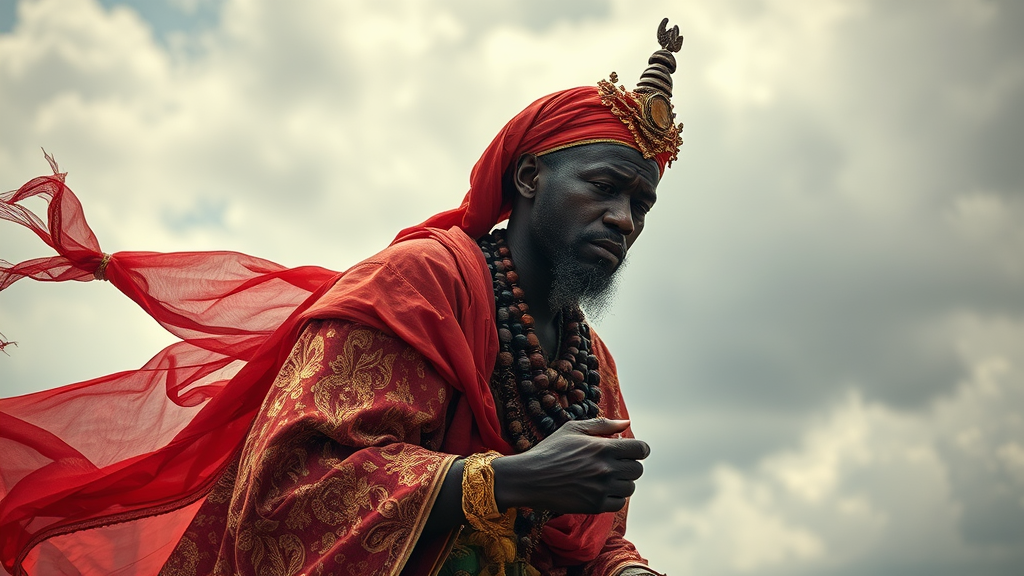
La figura de Xangô dentro del sistema religioso de la Umbanda representa una síntesis compleja entre la herencia yoruba de África Occidental y las adaptaciones sincréticas surgidas en el suelo brasileño. Históricamente, Xangô se identifica como el cuarto rey de la ciudad-estado de Oyo, situada en la actual Nigeria y Benin, donde su reinado quedó fundido con el mito de poder y sabiduría. Tras la diáspora transatlántica de esclavos, las comunidades de origen africano preservaron el culto a esta deidad, transformando su percepción bajo la iconografía de los santos católicos para evitar la persecución religiosa. En la formación de la Umbanda, religión que se consolidó a principios del siglo XX en Brasil, Xangô fue integrado como uno de los Orixás fundamentales, manteniendo sus atributos de soberano pero adaptándose a una estructura espiritual de carácter nacional yista. A diferencia de las manifestaciones puramente africanas, en la Umbanda Xangô se presenta como una entidad de orden y equilibrio que rige las leyes morales del universo, actuando como un puente entre la voluntad divina y la justicia terrenal.
Fundamentos Tradicionales
La ontología de Xangô se fundamenta en el dominio sobre los elementos naturales del rayo, el trueno y la piedra. El rayo es la manifestación física de su juicio instantáneo, una fuerza fulminante que elimina la mentira y restablece la verdad. La piedra, por su parte, representa la estabilidad, la inmutabilidad y la dureza de las leyes que él mismo decodifica. En la cosmología de los Orixás, se le asocia con el color rojo y blanco, y su herramienta principal es el oxé, un hacha de doble que simboliza la capacidad de cortar las injusticias. Su energía no es meramente destructiva, sino transformadora de una justicia imparcial que no distingue entre individuos en las consecuencias de sus actos. Se considera que Xangô es el dueño de la ley y el equilibrio, por lo que su devoción busca que la armonía solo se alcanza a través de la rectitud y la integridad personal, evitando el caos que la corrupción genera en el tejido social.
Importancia dentro de la Tradición
El rol de Xangô en la Umbanda es esencial para la comprensión de la ética dentro de la comunidad. Es el guardián de la justicia y el guía de quienes buscan la protección bajo el honor y el cumplimiento de la palabra sagrada. En los rituales, su presencia se invoca para resolver conflictos de carácter moral, exigiendo que los fieles actúen con honestidad absoluta. Su importancia cultural trasciende lo religioso para convertirse en un símbolo de la resistencia y la dignidad africana que se negó a doblegar ante la opresión. Al ser el rey de justicia, Xangô recuerda a los practicantes que el cast es una herramienta necesaria para la evolución espiritual, asegurando que cada acción humana tenga una consecuencia justa bajo la ley cósmica que rige con la misma fuerza que el rayo une lo terrenal con lo sagrado.
Origins and History
The figura of Xangô within the Umbanda religious system represents a complex synthesis between the Yoruba heritage of West Africa and the syncretic adaptations that emerged on Brazilian soil. Historically, Xangô is identified as the fourth king of the city-state of Oyo, located in modern-day Nigeria and Benin, where his reign became fused with the myth of power and wisdom. Following the transatlantic diaspora of enslaved people, African communities preserved the cult of this deity, transforming his perception under the iconography of Catholic saints to avoid religious persecution. In the formation of Umbanda, a religion that consolidated in the early 20th century in Brazil, Xangô was integrated as one of the fundamental Orixás, maintaining his attributes of sovereignty while adapting to a nationalistic spiritual structure. Unlike purely African manifestations, in Umbanda Xangô is presented as an entity of order and balance that rules the moral laws of the universe, acting as a bridge between divine will and earthly justice.
Traditional Foundations
The ontology of Xangô is founded on his mastery over the natural elements of lightning, thunder, and stone. Lightning is the physical manifestation of his instantaneous judgment, a flashing force that eliminates lies and restores truth. The stone, on the other hand, represents stability, immutability, and the hardness of the laws he himself decodes. In the cosmology of the Orixás, he is associated with the colors red and white, and his primary tool is the oxé, a double-headed axe that symbolizes the ability to cut through injustices. His energy is not merely destructive but transformative through an impartial justice that does not distinguish between individuals in the consequences of their actions. He is considered the owner of law and balance, so his devotion seeks to achieve harmony only through righteousness and personal integrity, avoiding the chaos that corruption generates in the social fabric.
Importance within the Tradition
The role of Xangô in Umbanda is essential for understanding ethics within the community. He is the guardian of justice and the guide for those who seek protection under honor and the fulfillment of the sacred word. In rituals, his presence is invoked to resolve conflicts of a moral nature, demanding that followers act with absolute honesty. His cultural importance transcends the religious to become a symbol of African resistance and dignity that refused to bow to oppression. As the king of justice, Xangô reminds practitioners that punishment is a necessary tool for spiritual evolution, ensuring that every human action has a just consequence under the cosmic law that rules with the same force as the lightning connects the earthly with the sacred.
Portal Africanista — Preservando raíces, construyendo puentes entre África y el mundo.