
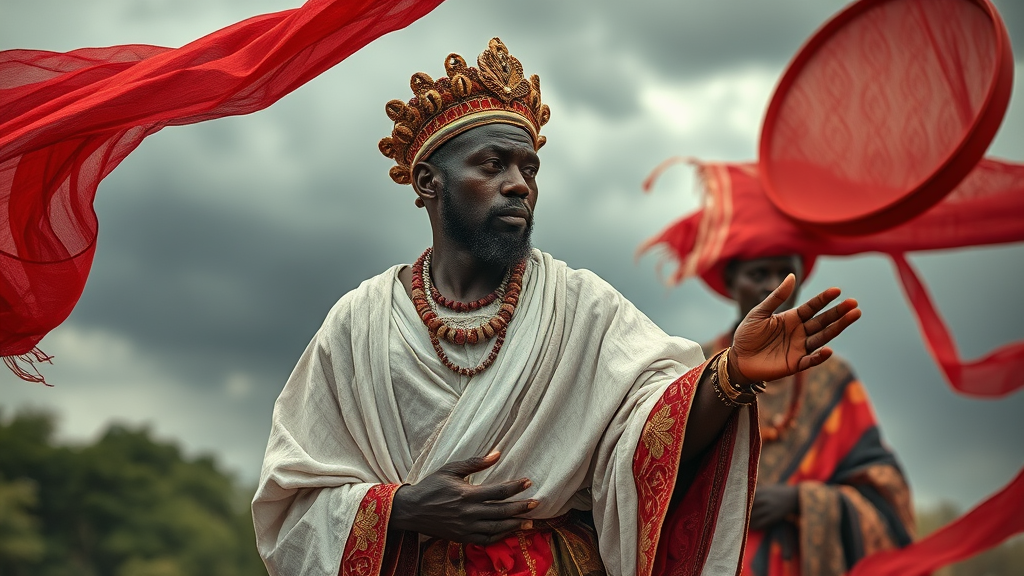
Origen e Historia
Eshu, conocido también como Elegbara, Esu, Exu o Elegua según las regiones y las tradiciones africanas y sus diásporas, ocupa un lugar primordial dentro del sistema teológico y ritual de Ifá Isese, la rama más ortodoxa y preservada de la tradición yoruba en Nigeria. Su figura se remonta a los antiguos mitos cosmogónicos del pueblo yoruba, donde se le describe como uno de los primeros enviados espirituales creados por Olodumare, el Ser Supremo, para servir como intermediario entre el cielo y la tierra. En los odu Ifá, los 256 capítulos del corpus oral que sustenta esta tradición, Eshu aparece mencionado en múltiples signos, consolidando su rol como portador de sacrificios, intermediador de mensajes y garante de la comunicación divina.
Históricamente, Eshu fue venerado en los antiguos reinos yorubas, particularmente en Oyo y Ekiti, donde se le construían shrines en las encrucijadas de los caminos, símbolo de su dominio sobre los cruces físicos y metafísicos. Su culto se extendió hacia Benin, Togo y otras regiones del golfo de Guinea, sufriendo adaptaciones y sincretismos que dieron lugar a variantes como el Vodun en Benín y el Legba en el panteón fon. A pesar de estas variaciones, la raíz conceptual permanece intacta: Eshu es el traductor necesario, el guardián del umbral que permite el flujo de información entre los planos espirituales y materiales.
Fundamentos Tradicionales
Dentro de la cosmología de Ifá Isese, Eshu/Elegbara es comprendido como el orisha que personifica el principio de la mediación, la contingencia y el movimiento. Se le atribuye la función de portar las ofrendas de los seres humanos hacia los orishas y de transmitir las respuestas divinas hacia los practicantes. Esta intermediación no es accesoria sino estructural: sin Eshu, los sacrificios no llegarían a sus destinatarios y la adivinación perdería su eficacia comunicativa. En los textos de Ifá, se afirma metafóricamente que ningún sacrificio sube sin su permiso y ninguna bendición desciende sin su aviso.
Los fundamentos rituales asociados a Eshu incluyen la presentación constante de ofrendas en cada ceremonia, la invocación de su nombre al inicio y al cierre de cualquier acto litúrgico, y la disposición de elementos específicos como aceite de palma, plumas, nueces de kola, frutos rojos y bebidas destiladas. Su energía se asocia con el color rojo y negro, con el número tres y sus múltiplos, y con el hierro, material con el que se elaboran algunos de sus objetos ceremoniales. Los awo practitioners, conocidos como babalawos, reconocen que el correcto entendimiento de Eshu es indispensable para evitar errores en los sacrificios.
Importancia dentro de la Tradición
La relevancia de Eshu en Ifá Isese trasciende su dimensión ritual para convertirse en un pilar ético y filosófico del sistema. Se le considera el principio de la dualidad y el equilibrio, capaz de probar la integridad del ser humano mediante desafíos que revelan su carácter verdadero. La tradición enseña que Eshu puede actuar como benefactor o como sancionador, dependiendo del comportamiento ético de los individuos. Esta función moral convierte su veneración en un acto de respeto a las leyes del destino trazadas por Orunmila.
En la práctica cotidiana de los templos Ifá, Eshu recibe culto diario mediante la alimentación de su receptáculo y la renovación periódica de sus elementos. Los babalawos sostienen que antes de invocar a cualquier otro orisha, es indispensable reconocer a Eshu, pues ignorar su presencia equivaldría a intentar enviar un mensaje sin intermediario. Su importancia se refleja también en la estructura de la adivinación, donde ocupa una posición jerárquica elevada entre los orishas funcionales del sistema Ifá.
Origins and History
Eshu, also known as Elegbara, Esu, Exu or Elegua depending on the regions and African traditions and their diasporas, holds a paramount position within the theological and ritual system of Ifá Isese, the most orthodox and preserved branch of the Yoruba tradition in Nigeria. Its figure dates back to the ancient cosmogonic myths of the Yoruba people, where it is described as one of the first spiritual envoys created by Olodumare, the Supreme Being, to serve as an intermediary between heaven and earth. In the odu Ifá, the 256 chapters of the oral corpus sustaining this tradition, Eshu appears mentioned in multiple signs, consolidating his role as bearer of sacrifices, messenger of messages and guarantor of divine communication.
Historically, Eshu was venerated in the ancient Yoruba kingdoms, particularly in Oyo and Ekiti, where shrines were built at the crossroads, symbolizing his dominion over physical and metaphysical crossings. His worship extended to Benin, Togo and other regions of the Gulf of Guinea, undergoing adaptations and syncretisms that gave rise to variants such as Vodun in Benin and Legba in the Fon pantheon. Despite these variations, the conceptual root remains intact: Eshu is the necessary translator, the guardian of the threshold that allows the flow of information between spiritual and material planes.
Traditional Foundations
Within the cosmology of Ifá Isese, Eshu/Elegbara is understood as the orisha that personifies the principle of mediation, contingency and movement. He is attributed the function of carrying the offerings of human beings to the orishas and transmitting divine responses to the practitioners. This intermediation is not accessory but structural: without Eshu, sacrifices would not reach their recipients and divination would lose its communicative effectiveness. In the Ifá texts, it is metaphorically affirmed that no sacrifice rises without his permission and no blessing descends without his notice.
The ritual foundations associated with Eshu include the constant presentation of offerings in each ceremony, the invocation of his name at the beginning and end of any liturgical act, and the arrangement of specific elements such as palm oil, feathers, kola nuts, red fruits and distilled beverages. His energy is associated with the red and black color, with the number three and its multiples, and with iron, material from which some of his ceremonial objects are made. Awo practitioners, known as babalawos, recognize that the correct understanding of Eshu is essential to avoid errors in sacrifices.
Importance within the Tradition
The relevance of Eshu in Ifá Isese transcends his ritual dimension to become an ethical and philosophical pillar of the system. He is considered the principle of duality and balance, capable of testing the integrity of the human being through challenges that reveal his true character. The tradition teaches that Eshu can act as benefactor or as sanctioner, depending on the ethical behavior of individuals. This moral function makes his veneration an act of respect for the laws of destiny traced by Orunmila.
In the daily practice of Ifá temples, Eshu receives daily worship through the feeding of his receptacle and the periodic renewal of his elements. The babalawos maintain that before invoking any other orisha, it is essential to recognize Eshu, since ignoring his presence would be equivalent to trying to send a message without an intermediary. Its importance is also reflected in the structure of divination, where it occupies an elevated hierarchical position among the functional orishas of the Ifá system.
Portal Africanista — Preserving roots, building bridges between Africa and the world.