
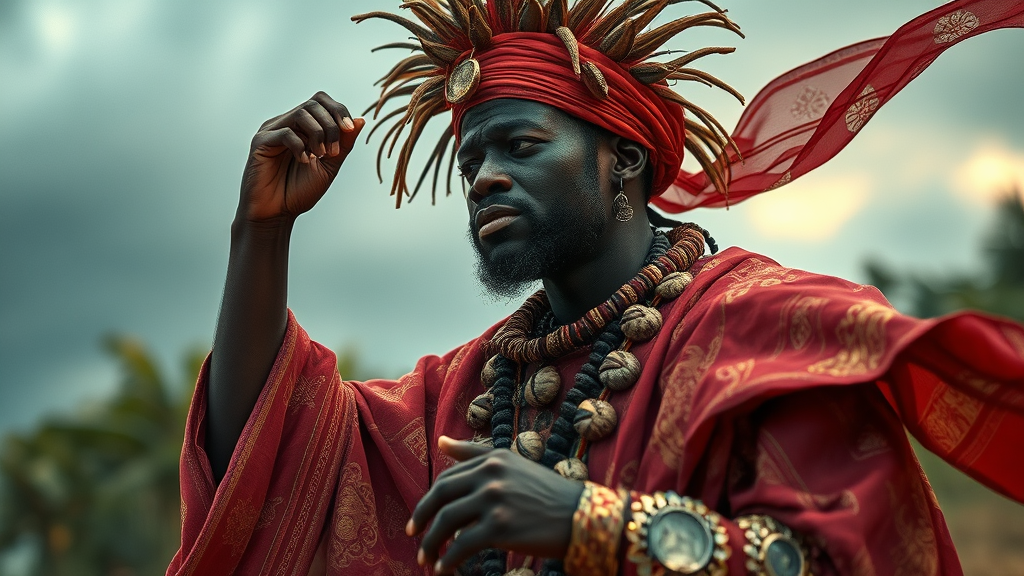
Origen e Historia
La figura de Bará, conocido también como Exu Bará dentro del panteón de la Umbanda, constituye una de las manifestaciones más antiguas y fundamentales de la línea de Exu en esta religión sincrética de origen brasileño. Su presencia se remonta a los procesos de formación de la Umbanda, a principios del siglo XX, cuando el médium Zélio Fernandino de Moraes recibió, según la tradición, la entidad que fundó la Tenda Espírita Nossa Senhora da Piedade el 15 de noviembre de 1908, en el barrio de Neves, en São Gonçalo, Río de Janeiro. Dentro de ese contexto fundacional, Bará fue presentado como la primera línea vibracional en descender, consolidándose como el abridor oficial de los trabajos espirituales y el guardián primordial de las encrucijadas.
La Umbanda, como sistema religioso que sintetiza elementos del Candomblé, el Catolicismo popular, el Espiritismo kardecista y las tradiciones espirituales africanas, otorgó a Bará un lugar jerárquico singular. Su origen sincretico se nutre tanto del Legbá yoruba como del concepto bantú de guardianes territoriales. Los antiguos cultos bantúes traídos al Brasil durante la trata atlántica aportaron la noción de espíritus que custodian las puertas entre el mundo visible e invisible, mientras que la matriz yoruba-ifá contribuyó con la teología de Esu como principio dinámico y mensajeros oraculares.
Fundamentos Tradicionales
Bará ocupa en la Umbanda la posición jerárquica más elevada dentro de la línea de Exu, considerándose su primer Exu o Exu Mayor. Su principio teológico se basa en la custodia de los caminos, las encrucijadas y las puertas dimensionales, siendo responsable de vigilar el tránsito entre los planos espiritual y material. En los puntos risueños y míticos donde se cruzan caminos físicos y senderos astrales, Bará ejerce su jurisdicción como centinela absoluto, regulando el acceso de las entidades al plano terrenal y protegiendo los templos y terreiros de influencias nocivas.
Su día ceremonial se celebra tradicionalmente el 24 de junio, coincidiendo con las festividades católicas de San Juan Bautista, fenómeno de sincretismo característico de la Umbanda. Durante esta fecha, se encienden hogueras, se ofrecen ofrendas y se realizan rituales de apertura espiritual. Bará se manifiesta con atributos específicos: su cayado o herramienta simbólica, la representación de encrucijadas mediante cruces de caminos dibujadas en el suelo, y la asistencia de sus auxiliares conocidos como Exus de la línea de Bará, quienes ejecutan sus designios bajo su autoridad.
Importancia dentro de la Tradición
La relevancia cultural y religiosa de Bará trasciende su función estrictamente ritual para constituirse en un pilar estructural de la cosmología umbandista. Como primer guardián de los caminos, Bará garantiza que las giras espirituales, las consultas y los trabajos terapéuticos puedan desarrollarse dentro de un espacio sagrado protegido. Su ausencia o desatención ritual se considera un factor de riesgo espiritual, pues los caminos quedarían desprotegidos ante entidades de baja vibración o energías desequilibradas.
Dentro del funcionamiento interno de los terreiros, Bará recibe las primeras reverencias al inicio de cada sesión, abriéndose los trabajos con su invocación antes que cualquier otra entidad pueda manifestarse. Esta preeminencia jerárquica refleja la comprensión umbandista de que toda comunicación espiritual debe ser mediada por un guardián que asegure el orden y la protección del espacio ritual. Su culto preserva además memorias africanas fundamentales, manteniendo vivos elementos de las tradiciones bantú y yoruba que, de otro modo, hubieran podido fragmentarse en el contexto diaspórico brasileño. Bará representa así un puente entre la herencia africana ancestral y las prácticas religiosas contemporáneas del Brasil, siendo venerado tanto por su dimensión protectora como por su papel como comunicador entre dimensiones y ancestros.
Origins and History
The figure of Bará, also known as Exu Bará within the Umbanda pantheon, constitutes one of the oldest and most fundamental manifestations of the Exu line in this Brazilian syncretic religion. Its presence dates back to the formative processes of Umbanda in the early twentieth century, when the medium Zélio Fernandino de Moraes received, according to tradition, the entity that founded the Tenda Espírita Nossa Senhora da Piedade on November 15, 1908, in the Neves neighborhood of São Gonçalo, Rio de Janeiro. Within this foundational context, Bará was presented as the first vibrational line to descend, establishing itself as the official opener of spiritual works and the primordial guardian of the crossroads.
Umbanda, as a religious system that synthesizes elements of Candomblé, popular Catholicism, Kardecist Spiritism, and African spiritual traditions, granted Bará a singular hierarchical place. Its syncretic origin draws from both Yoruba Legbá and Bantu concepts of territorial guardians. The ancient Bantu cults brought to Brazil during the Atlantic trade contributed the notion of spirits that guard the doors between the visible and invisible worlds, while the Yoruba-Ifá matrix contributed the theology of Esu as a dynamic principle and oracular messenger.
Traditional Foundations
Bará occupies the highest hierarchical position within the Exu line in Umbanda, being considered its first Exu or Greater Exu. Its theological principle is based on the custody of the paths, crossroads, and dimensional gateways, being responsible for overseeing the transit between the spiritual and material planes. At the mysterious points where physical paths cross astral trails, Bará exercises its jurisdiction as absolute sentinel, regulating the access of entities to the earthly plane and protecting the temples and terreiros from harmful influences.
Its ceremonial day is traditionally celebrated on June 24, coinciding with Catholic festivities of Saint John the Baptist, a characteristic syncretism phenomenon of Umbanda. During this date, bonfires are lit, offerings are presented, and opening spiritual rituals are performed. Bará manifests with specific attributes: its staff or symbolic tool, the representation of crossroads through crossroad drawings on the ground, and the assistance of its auxiliaries known as Exus of the Bará line, who execute its designs under its authority.
Importance within the Tradition
The cultural and religious relevance of Bará transcends its strictly ritual function to constitute a structural pillar of Umbandist cosmology. As the first guardian of the paths, Bará guarantees that spiritual sessions, consultations, and therapeutic works can develop within a protected sacred space. Its absence or ritual neglect is considered a spiritual risk factor, as the paths would remain unprotected against low-vibration entities or unbalanced energies.
Within the internal functioning of the terreiros, Bará receives the first reverences at the beginning of each session, opening the works with its invocation before any other entity can manifest. This hierarchical preeminence reflects the Umbandist understanding that all spiritual communication must be mediated by a guardian who ensures the order and protection of the ritual space. Its cult also preserves fundamental African memories, keeping alive elements of the Bantu and Yoruba traditions that might otherwise have fragmented in the Brazilian diasporic context. Bará thus represents a bridge between ancestral African heritage and contemporary religious practices in Brazil, being venerated both for its protective dimension and its role as communicator between dimensions and ancestors.
Portal Africanista — Preservando raíces, construyendo puentes entre África y el mundo.